
Year: 2026
Publisher: Aula & Co
Available in: Finnish
Tapio Kotkavuori is a name that probably won’t ring many bells outside of Finland – with the possible exception of active members of the Temple Of Set during the 90’s and noughties. However, at the very least since the publication of Perttu Häkkinen’s and Vesa Iitti’s Valonkantajat/Lightbringers Of The North (English translation reviewed here) he’s become one of the more known names within Finnish occultism and esotericism even among those only superficially familiar with the topic.
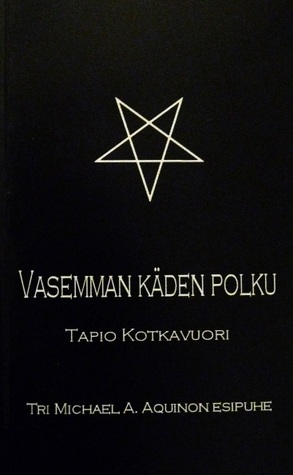
In many ways, Tapio Kotkavuori represents, like Johannes Nefastos among currently active occultists, the antithesis of figures such as Pekka Siitoin and Ior Bock. Where the latter are primarily known for their excesses, exorbitant shenanigans and, let’s be honest, often comical takes on esotericism, Kotkavuori was the epitome of the serious occultist. His legacy is the first (serious) book on Left-Hand Path occultism in Finland, not debauched antics.
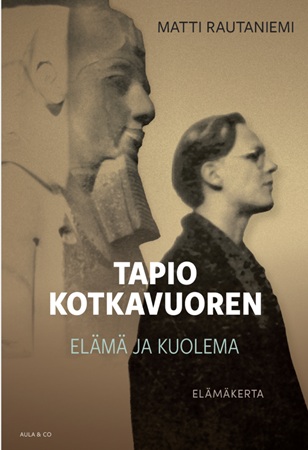
Matti Rautaniemi’s book Tapio Kotkavuoren elämä ja kuolema is a thorough biography of Kotkavuori, detailing the his life and times, starting from him joining the Temple Of Set in the early 90’s and ending somewhat after his death in the latter half of the noughties – a death that has not precluded Kotkavuori from making brief returns to this mortal plane.
Rautaniemi manages to tell a captivating story, which is no mean feat considering Kotkavuori was not a flamboyant person wont to cause public consternation with his stunts, like Pekka Siitoin or, for example, Aleister Crowley and Anton LaVey were. Kotkavuori did cause some public outcry with his aforementioned book, though!
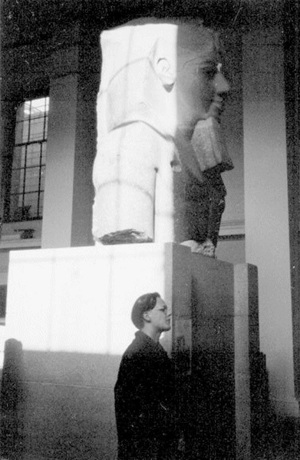
Paradoxically, even while painting a detailed and at times intimate portrait of Kotkavuori, he and his closest companions remain somewhat shrouded and distant. The book refuses to breach the veil of anonymity, never revealing too many identifying details of the persons involved. (To elucidate, Tapio Kotkavuori was a pseudonym or magical name, and Kotkavuori’s death was not a death in the conventional, material sense. The book also uses pseudonyms for many other prominent characters.)
If Kotkavuori as a person remains in some aspects a tad distant, his outlook on esotericism, occultism and magick do not. These are explored and described in admirable detail. The book also delves deep into the philosophy, history and structure of the Temple Of Set, as well as describing various ritual workings.
Stylistically, the book finds a balance between matter-of-fact descriptions and preserving the mystery inherent in magick. Rautaniemi rarely ever implies any kind of fantasy-novel like element to magick (and when he on the rare occasion does, there’s a wry and humorous side to be found), but neither does he reduce it to mundane banality. This makes the book accessible to both sceptics and practicing occultists. And also the layman: Rautaniemi explains the relevant concepts in a brief but enlightening manner.

The key theme of the book is Kotkavuori’s initiation and the forms it took. Or, at least, this is the central theme that resonated most with me. Rautaniemi portrays initiation as a continuous and deeply personal process, which ultimately is independent of initiatory organizations or any specific esoteric school of thought. Kotkavuori’s trajectory starts from the Temple Of Set, but ultimately expands beyond its philosophy, as well as outside and beyond divisions of Left-Hand and Right-Hand Paths.
In esoteric contexts, initiation is often spoken of as earning degrees and titles in some occult order. Whilst these play a part in the book, the truly significant initiation is an inner and far more subtle one. It’s a process of continuous evolution, of integrating occult work into one’s daily life. Initiation comes in the form of constant tiny gnoses, of applying occult philosophy and methods to one’s life and on the other hand advancing on the initiatory path through realization and attainment in daily life. It is not something that can be ensconced into a ritual chamber, separated and apart from everything else.
At the same time, the ritual chamber and the initiatory order are constant presences in the book. The book compellingly lays out several benefits of joining an order without explicitly advocating it. As Kotkavuori’s path exemplifies, an order or fraternity can help one to focus one’s initiation, direct it in a specific direction, and of course provide guidance, counselling and support, as well as a conceptual and ideological framework from within which to operate. Initiation is not an easy path. It’s not a clear cut one. It’s a winding path full of dead ends, pitfalls and steep inclines which one will tumble back down when one falls. And one will stumble and fall, frequently. To go at it alone is arduous and demanding. An order will not pave the way, but it might shine a light on one possible path.
Tapio Kotkavuoren elämä ja kuolema achieves something remarkable in its down-to-earth style that manages to avoid dryness: it is accessible and appealing the layman and the traveller on the occult path alike. To the layman, it communicates the draw and pull of the occult path with neither too much mystification nor banalisation; the esotericist, on the other hand, will draw much from Rautaniemi’s empathetic but also sufficiently objective portrayal of one person’s occult journey. If not exactly doctrine, then at least the lived wisdom of experience.
The book has been met with surprising amounts of enthusiasm and praise in more mainstream press here in Finland. Upon reading the book, I can see why. Perhaps it’s a bit of a bold statement, but I’m going to make it anyway: this is the best popular work on esotericism since aforementioned Valonkantajat. There have been several good books published in the interim, but this manages to raise the bar.
Visit Aula & Co’s website for more information


2 thoughts on “Rautaniemi, Matti: TAPIO KOTKAVUOREN ELÄMÄ JA KUOLEMA”