
The late 70’s were a troubled time for heavy metal pioneers Black Sabbath, as we’ve established earlier in this series with our look at Technical Ecstasy (here). 1978’s Never Say Die was even more troubled. Ozzy Osbourne had already once left the band. He’d been replaced by Dave Walker of Savoy Brown and Fleetwod Mac fame, whose only lasting contribution to Sabbath was one recorded television appearance.
Eventually, Ozzy was convinced to return, the album was hastily stitched together in the studio and the band hit the road again. But, as we all know, whatever glue they used to patch up Black Sabbath didn’t last for long: Ozzy was fired less than a year later, and after finding their bearings, the band returned in fine form with Ronnie James Dio. And Ozzy, of course, landed on his feet and launched a wildly successful solo career.
Compared to the more than a little pretentious Technical Ecstasy and it’s pseudo-prog rock wankery, Never Say Die attempts to get back to what Black Sabbath knew how to do. Sort of. At least it scales back the worst and most misguided aspirations towards ambitiousness. It’s still a confused mess of an album which, in hindsight sounds, and probably at the time of release, too, sounded like a band falling apart.
There are a few highlights on the album which, whilst by no means equal to anything Sabbath did on their five first albums, make the album listenable. The title track is a pretty decent uptempo rocker, and has even been featured on some best of albums. Not quite deservedly, but it’s a lot better than the tepid Dirty Women from Technical Ecstasy that the band insisted on playing live during their reunion years. Another, arguably brighter highlight is Shock Wave, which probably contains Iommi’s most inspired work on the album.
But the true highlight for me is Junior’s Eyes, the one song Dave Walker put on video tape with the band, in a heavily reworked version. Bassist-lyricist Geezer Butler apparently had to rush to get all lyrics rewritten, as Ozzy plainly refused to sing anything recorded for another vocalist. There’s no whiff of a rushed job here: the somewhat open-ended lyrics are a tragic and heartbreaking tale of what I interpret as a young kid’s first experiences of true loss. It’s a fine song, one that could have been a centrepiece on a better album.
Of course, there’s also a fair share of tracks that just don’t work with Black Sabbath. Over To You sounds like the Birmingham boys trying to channel The Beatles during their psychedelic phase, or something. It doesn’t work. Peak absurdity on the album is album closer Swinging The Chain, a weird song about I don’t know what, but it mentions Hitler and guilt so maybe it’s about the collective guilt of the Germans? Drummer Bill Ward handles the vocals, because apparently Ozzy was too embarrassed by the lyrics. I can sympathize.
And there are other rather tepid moments on the album as well. The pointless chug of A Hard Road, the weird balladesque Air Dance (with a nice intro riff by Iommi) and the jazzy instrumental Breakout with a horn section. Tracks like these prove that Black Sabbath had no direction anymore, and their identity had been drowned in mounds of white powder, excess and rock stardom.
Comparing this album to Heaven And Hell, which saw Black Sabbath return to honest heavy metal, focused songwriting and, let’s be frank, quality, it comes as doubly amusing how still to this day some people accept only Ozzy-era Black Sabbath as the real deal.
I mean, the last three Ozzy albums are increasingly lost, increasingly unfocused, increasingly confused cries of help from a band who’d lost their way and their creative genius. Never Say Die was a last ditch attempt to reclaim something of what’d been lost, and it’s painfully obvious that there was next to nothing left to save.
And then some cluck their tongue at a new formation of the band, led by one of the best metal vocalists ever, bounding back with one of the best metal albums of all time. People, am I right?
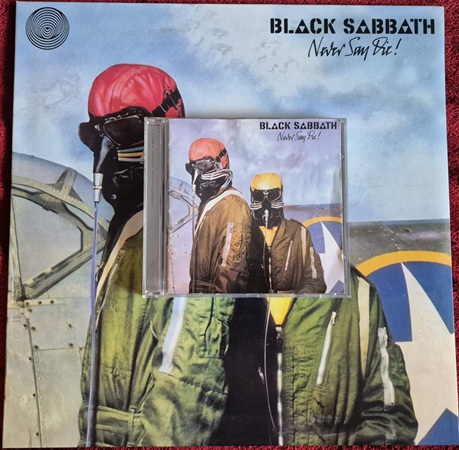
I think this was the first or second Black Sabbath album I bought way back in the mid-90’s when we got a CD player. The 1996 Castle Communications CD remaster is featured in the cover photo (along with a generic 2010’s vinyl repress). The first was either this or Dehumanizer (read more). I did already have a couple of compilations on tape, so the classics were familiar, but because Never Say Die was one of my first CD’s, I listened to it copiously. And liked it way more than it deserved, because I didn’t know any better.
There are a lot of memories connected to this album. I remember getting it mere weeks before starting the upper classes of primary school in a new school with mostly new classmates. I remember copying the album on tape to listen to on bus trips to school and back – I didn’t have a discman! – and wondering with my then still lacking English skills what the lyrics were all about. In a small way, Never Say Die is the soundtrack to childhood’s end to me.
Never Say Die isn’t a great album. It’s the lesser successor of greater forebears. But be that as it may, I can’t help but have a soft spot for the album. There are so many memories, good and bad, linked to it. It was part of a rather limited playlist of a crucial stage of my life. And things like that make music precious to one, regardless of whether the music is good enough to deserve it. Never Say Die probably isn’t.
In From The Vaults we take a dive into the record collection at Only Death Is Real HQ and write about about items of iconic stature or personal significance; rarities and oddities from the archives; obscure gems that deserve more attention; classics of yore deserving of a moment in the limelight; and so on.
 Only Death Is Real
One thought on “From the Vaults #25: Never Say Die”