
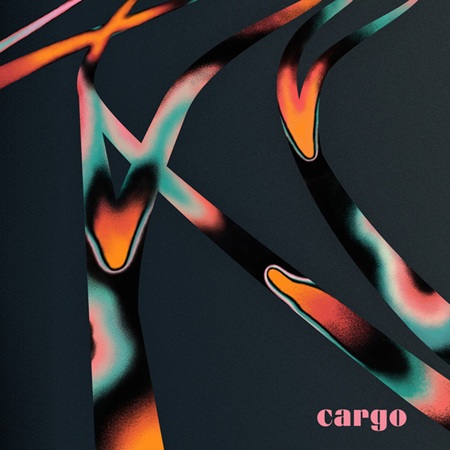
Year: 2026
Label: Zoharum
The last time we covered Polish Łubin, we dealt with a conundrum of an album. Gaza (review) was simultaneously insufferable, intolerable and incredibly potent; an album one just couldn’t ignore, even if one didn’t like it. Suffice to say, it left an impression – but hasn’t spent any time in our CD player since then.
Łubin’s newest output is considerably less contradictory, but no less conceptual. This makes for another album that is complicated to tackle, but luckily not quite as.
This time around, Łubin focus on trains. The indecipherable track titles – 201 E and SM 42 Typu 6D to mention two – become far less perplexing when one realizes they are locomotive models. Apparently, a lot of the sounds on the album have been recorded live at various train yards.
You can actually hear it, too. The rhythmic clacking of train tracks gives many of the tracks a back bone. At other times, a layer of sound washing over the listener is obviously a train speeding by. But, on the whole, Cargo is every bit as abstract and amorphous in form as any experimental electronics album is wont to be. This may be an album inspired by trains and made with the sound of trains but but it doesn’t really try dictate what it is about trains it wishes to speak of.
The musical guise this time around is understated, abstract and experimental industrial electronics. Cargo leans obviously in an ambient direction, although it doesn’t quite reach that level of understatedness. In fact, most of the tracks are rather active in a decidedly un-ambient way, whilst retaining ambient’s inherent abstraction of form.
The tracks are predominantly rather long, slowly morphing and shifting sculptures of sound, of slowly evolving, ebbing and flowing layers and currents. The clacking of tracks and din of trains passing by is completed by synthesizers and other electronic sources of sound, which sometimes play pseudo-melodies, such as on TEM 2, but most of the time are purely atonal.
There’s a collage-like element to the compositions Łubin build from these disparate sources, with a certain friction between the different layers. They don’t always gel seamlessly together; instead, Łubin seemingly deliberately build up a certain tension between the different layers of sound.
The feel I get from Cargo is, above all, one of transport and a sort of static movement. An idea of things moving, or being transported, along a pre-set network of movement between two points – train tracks, as it were. There’s nothing organic or living about Cargo; it’s a very mechanistic and blocky album in many ways. It’s also anything but sterile. The mechanical nature of Cargo is that of old trains, coated in rust, caked oil and dirt, but still running reliably and almost effortlessly. Cargo is an album of the beauty of old, cumbersome hulks speeding to life and gaining grace in carrying out their purpose.
To reiterate the opening, Cargo is obviously a very conceptual album. At the same time, it deliberately keeps its concept quite obscure. How the sound of trains relates to the names of the tracks and the name of the album, and what this might stand as metaphor for is left for the listener to interpret. Just like with Gaza, on Cargo Łubin don’t force a specific perspective on the listener.
Purely musically, on absolutely every level, I prefer Cargo over Gaza. This album I quite like. The sound collage like nature of the music does mean some of the layering is a bit hit-and-miss and some tracks just don’t appeal to me as much as some others. But I like the sort of archaically mechanistic feel of the album. And as someone who has spent many a night falling asleep to the steady clack clack clack of a speeding train, there’s something familiar and oddly comforting in these sounds.

