
Year: 2025
Label: Zoharum
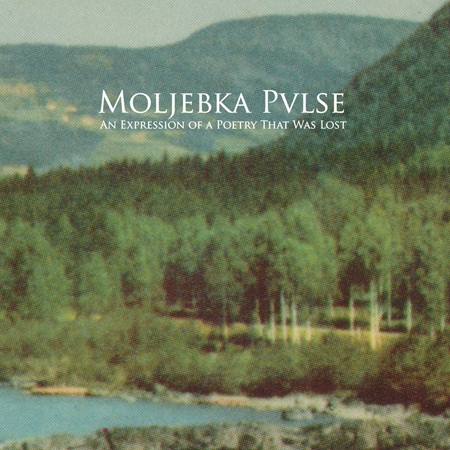
Here’s an album I wanted to like from the moment I set my eyes on its cover. There’s something in the combination of this slightly blurry, beautiful picture of nature and the name of the album that’s just inspiring. Somehow the title and the cover artwork click, despite ostensibly bearing little to no relation.
Luckily, the album delivers on the evocative name. Both in terms of style and quality. Here’s an album somewhere on the ambient spectrum, which, again, befits the name and the artwork, and is good.
The name of the album makes me return to the themes I discussed in my recent essay, Metaphysics matter: on the significance of more philosophical writing about music (here). With a title such as the album has, Swedish-German Moljebka Pvlse land their arrow right in the middle of my musings, and the neoplatonic idea of art being able to access the soul of the experiencer directly, circumventing both language and logic.
Because that’s exactly what this album feels like: without words, it speaks of something long forgotten, almost lost; something primordial and eternal. A poetry that is not of words or rhythm, but of – well, words escape me! – impressions, visions, and an innate, sympathetic understanding.
To digress from the poetically waxing, Moljebka Pvlse’s take on ambient leans firmly in the direction of dark ambient. The musical backbone is based on eerie, metallic and cold, industrial layers of sound. There is a definite haunting otherness to it. Beneath these, long, drawn out, droning layers of ethereal, harmonious synthesizers weave an astral, cosmic atmosphere. The work is grounded by traditional instruments such as bass and piano, which do not play conventional melodies or structures, but their very tonality bring an earthy, familiar and an even somehow comforting aspect to the music.
But I wouldn’t say the album is dark, foreboding or ominous in the sense dark ambient is. There is a coldness and a distance to the music, but it’s more the distance to something, well, forgotten, as it were. And there is also warmth in the more traditional instruments, in particular the piano adds intimate tones that serve as counterpoint to the alien, metallic coldness.
The resulting sound is one where a sliver of darkness accentuates and balances a beautiful light. The two long tracks the album consists of, Memories and Dreams, both take a similar form of long, droning arches of sound that slowly evolve, modulate and undulate. Over and under these are layered both more organic and more industrial sounds, which create a sort of juxtaposition and tension, but not friction, between the two poles.
The track names feel very apt. As is usually the case with ambient, An Expression Of A Poetry That Was Lost is entirely abstract and, in being entirely instrumental, provides essentially no conceptual framework. But it is precisely in the domain of almost forgotten memories and dreams, or some such layer of momentarily recalling something long lost, that the album operates. The listener will give their own meaning to the music, but there is a quality of something just outside the borders of conscious thought in it.
To reiterate the introduction to this review, Moljebka Pvlse set a considerable amount of expectations on the music with the album title and the cover artwork. And, gratifyingly, they match the music to it.
Somewhere in the borderlands between ambient and dark ambient, somewhere mostly forgotten and almost lost, somewhere beyond words and mundane rationality, An Expression Of A Poetry That Was Lost finds a kernel of beauty and its innate truth, and communicates it directly to the listener’s soul.
Visit Moljebka Pvlse on their official site, Bandcamp or Facebook
 Only Death Is Real