
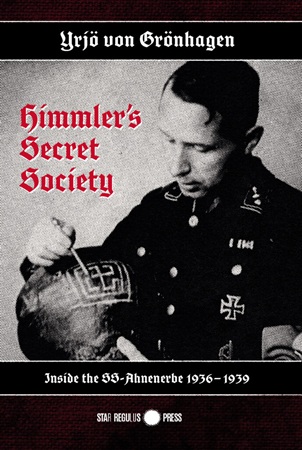
Year: 1948/2025
Publisher: Star Regulus Press
Original title: Himmlerin salaseura
Available in: English, Finnish and possibly other languages
During the summer of 1935, a young Finnish student of the Sorbonne in Paris decides to travel from France to Finland by foot. He ends up at the Nuremberg rallies, becomes acquainted with Heinrich Himmler, leader of the SS, and becomes a head of department and the pseudoscientific Ahnenerbe Institute, an organization subordinate to the SS. The story sounds made up and like the plot of a pretty good comedy movie. But is, it turns out, entirely true!
Finnish Yrjö von Grönhagen (1911-2003) really did become director of Indo-European-Germanic Cultural Relations in Ahnenerbe, having impressed Himmler with an article he wrote for a German newspaper, as well as personally upon meeting the SS leader. Grönhagen was involved in expeditions to Finland, where the German institute studied and interviewed Finnish runesingers and cunningmen (the word preferred by translator Ike Vil -ed.). The Germans also recorded runesinging with the then-pioneering magnetophone; for example the singing of Timo Lipitsä, sometimes called the last of the runesingers, was put on tape during these expeditions.
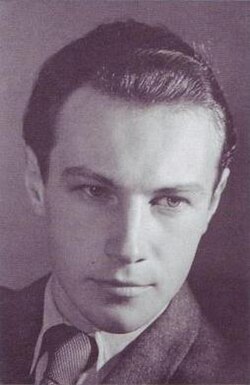
Grönhagen’s book, originally published in 1948 as Himmlerin salaseura in Finland, focuses on his experiences and life during the era of national socialism. Despite its name, only about half of the book actually deals with the Ahnenerbe, and stuff like secret rituals of the SS are entirely absent. Grönhagen begins his autobiographical tale by lengthily recounting his journey through France, Belgium and Germany. For someone eager to dig into Nazi occultism, this feels like a prologue that drags on, but actually this part is highly interesting.
In this introductory part, Grönhagen describes the regular people he met during his journey; their opinions and feelings, painting a complex picture. Germans admired, hated, respected and despised Hitler. War was feared, hoped for or not believed in at all. The xenophobia of the National Socialists was hated and loathed, but also believed in. As a mostly neutral observer, who only occasionally chips in with an opinion of his own, Grönhagen describes the multitude of opinions and attitudes of regular German folk in the pre-war period.
Also, significantly, Himmler’s Secret Society isn’t a genre book. In 1948, Nazi occultism was neither a thing nor a genre of literature. Thus, Grönhagen’s depiction of the Ahnenerbe doesn’t align with the conventional, often very sensationalist descriptions that have become tropes in the genre. Quite the opposite, in fact: Grönhagen describes the Ahnenerbe as a surprisingly academical institute, where the biggest problem most researchers faced was the pettiness and selfishness of its leaders, which crippled the possibilities of its both skilled and eager staff.
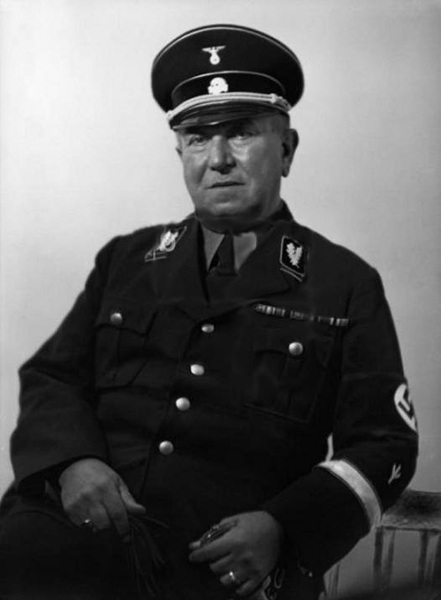
Certainly, there are weirdos in the list of characters as well. Greatest of them is, without a doubt, Karl Maria “Weisthor” Wiligut, a person of note in the “Nordic Ring of the Wise“, descendant of Thor himself, and the last great Germanic seer. An original, some would say. Others: batshit crazy. Undeniably, this man of original and unusual theories had a great influence on Himmler, but in Grönhagen’s description, the more academically inclined employees of the Ahnenerbe could often waltz around his authority.
Grönhagen, who for quite some time was a guest at Wiligut’s, dedicates a considerable amount of pages to describing the latter’s unique theories. Things get particularly, eh, esoteric when British-Belgian mystic Gaston de Mengel steps into the picture. The translator of the book, aforementioned Ike Vil of Babylon Whores and Sleep Of Monsters, has recently published a book on the decidedly mystic de Mengel, Chasing the Green Dragon (Star Regulus Press 2025), which we reviewed separately here.
At any rate, esotericism, occultism and batshit craziness are just a minor part of the book. Grönhagen focuses much more on his own story and the more serious research conducted by the Ahnenerbe.
Often during the course of the book, the reader is forced to ask themselves: can this be true? The broad strokes are undeniably factual, and many of the details of Grönhagen’s text are proven true by photos of inscriptions and signatures from his travel book. Still, it is hard not to sense a bit of poetic license here and there. Did Grönhagen really meet Italian dictator Benito Mussolini in 1945? So Grönhagen himself claims, but apparently there’s little to corroborate this in other sources. In her book Villi Suomen historia (Tammi 2015), Inkeri Koskinen calls into question Grönhagen’s description of the Ahnenerbe: she finds significant omissions in both persons and events. But, on the other hand, as the translator told me, he’s yet to catch Grönhagen with a lie – so perhaps truth is once again stranger, and more fantastic, than fiction!
What is undeniable fantasy is that there would have been some kind of mystic Nordic Ring of the Wise that would have wielded a great influence over Hitler. Grönhagen seems to accept its existence and power, even while describing Wiligut predominantly as a buffoon who everyone but Himmler laughed at.
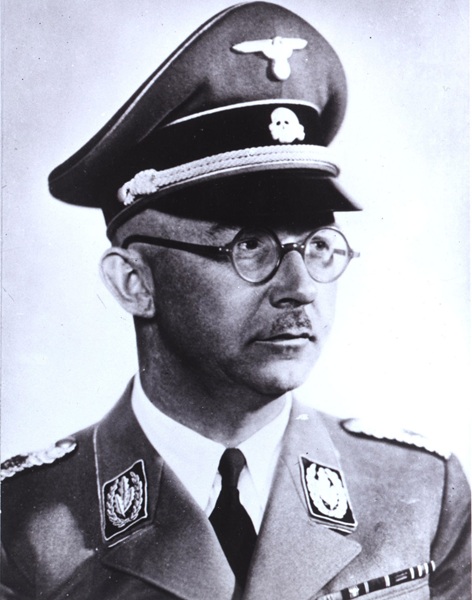
Either way, Himmler’s Secret Society is a unique contemporary description of Nazi Germany and the Ahnenerbe. As an “outsider on the inside”, Grönhagen is in some ways the ideal observer who, thanks to his outsider-ness, manages to keep a certain distance. On the other hand, at times Grönhagen emphasizes his neutrality quite a lot, which seems a tad artificial. Could Grönhagen really act within the Ahnenerbe, an organization embedded deep in racial ideology, without at least a lip service belief in it?
Maybe he could. In any event, the rest of Grönhagen’s life was shadowed by suspicions of Nazi sympathies, even though he was officially cleared of any connections in an investigation. Apparently in part due to these, Grönhagen left Finland in the 60’s. The shadow of the suspicions is long: former Finnish president Sauli Niinistö found himself embroiled in a small scandal when he was inducted into the Ordo Sancti Constantini Magni (Order of Saint Constantine the Great) in 2011 – a suspicious order, because Grönhagen had founded its Finnish chapter!
To be honest, Grönhagen’s original text is no milestone in prose. It’s essentially functional both linguistically and in narrative. Vil’s adept transation manages to replicate the slight stiltedness of the original. In other words: yes, the text is a bit clumsy, but no, it’s not the translator’s fault. This translation also has an added appendix with short biographies of many central figures of the book, which is a welcome addition. Everybody knows who Heinrich Himmler was – but who knows Axel Ringström?
Himmler’s Secret Society is easy to file under the heading “curiosities for the dedicated hobbyist.” It describes an interesting but, in a bigger picture, quite insignificant historical detour. And through a very subjective lens, to boot. Even to the average World War II buff, this might be too marginal. But on the other hand, for us few, who find endless joy and delight in exploring all the weird brambled paths of history and muddy pools of esotericism, this can be called a must-read. Just because it isn’t a genre book. It offers a different perspective on the rather worn-out topic of Nazi Occultism, and a unique, Finnish perspective on 1930’s Germany.
Visit Star Regulus’ website for more information
This review was originally published in Finnish in Imperiumi
 Only Death Is Real
2 thoughts on “Grönhagen, Yrjö von: HIMMLER’S SECRET SOCIETY”