

Year: 2025
Publisher: Abraxas Publishing
Original title: Against the Light – A Nightside Narrative
Available in: English, Finnish and possibly other languages
Kenneth Grant (1924-2011) might be the most influential occultist since Aleister Crowley. Grant also represented a significant link in the chain of the living continuum of occult tradition, having known and briefly studied under Crowley, not to mention his friendship and collaboration with Austin Osman Spare.
His main works are the so-called Typhonian Trilogies, three trilogies totaling in nine books of what can only be called heavy duty occultism. Whilst undeniably modern classics of occult literature, they are far from universally lauded. Quite the contrary, in fact. Many are those who criticize the books, and consider Grant an eccentric among eccentrics at best, a hack at worst. It is hard to ignore the trilogies when talking of Grant’s writing, even though they’re not our focus of the day.
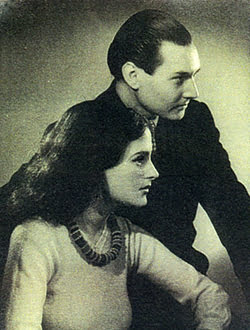
Undeniably, his non-fiction work is a confusing, jumbled and chaotic thing. Grant is wont to jump from one topic to the next, with a paragraph having little to do with those surrounding it. He wrangles phonetic similarity to conceptual correspondence. He suffocates the reader with insane amounts of references, names, concepts and ideas. He syncretically cobbles together disparate concepts.
Ultimately, trying to glean a coherent system or occult philosophy from Grant’s writing is a futile exercise. If there is a logic in his text, a lot of the time it is a logic only Kenneth Grant could follow. The rest of us are missing vital pieces. Instead, Grant’s writing as a whole is a chaotic mess from which moments and passages of brilliant, inspiring and lucid thought emerge for the reader to hang on to. And that’s how it’s best read, if you ask me: don’t try to understand everything. Just go with it. And when you come across something that reverberates with you, as will happen, hang on to it.

Grant was also a writer of occult fiction. Valoa vasten, Against the Light in the original English, is his first novel from 1997, and at the same time the first of Grant’s books translated in Finnish. Abraxas‘ hand-numbered hardcover edition is a stylish artifact, just like especially the hardcover editions of the Typhonian Trilogies are; it deserves a place in any collection for that alone.
This Finnish translation contains a lengthy essay by Antti Litmanen, which takes up about a third of the ca. 200 page book. It is a great introduction to the weird and mystifying world of Kenneth Grant, presenting his core ideas as well as a brief biography. It paints Grant’s eccentricities in a sympathetic colour, attempting to penetrate through the erratic surface of Grant’s writing.
And does a good job at it. Grant’s writing is still a weird chaos, but it helps one understand at least a bit better what to look out for. As such, it is recommended reading for every Finnish Grant reader – or would be Grant reader.

The novel itself is typical Grant in very many ways. It is essentially a pseudo-biographical work of occult fiction, fusing together autobiographical elements, historical facts and pure fiction into a whole that is… well, absolutely weird. There’s no point in looking for a linear, logical narrative here.
As in his non-fiction work, Grant crams the book full of obscure references. The intertextuality of the book is daunting. Grant references his own writing, Aleister Crowley, Austin Osman Spare, H.P. Lovecraft, Arthur Machen, P.D. Ouspensky and dozens of others, fully expecting the reader to be familiar with all of them, or reader be damned. Add to that his constant parade of obscure, occult concepts which he will throw into the text and refuse to elaborate on.
Partially thanks to this, Valoa vasten is a confusing read. But it runs deeper, into the very structure of the narrative. The book starts out as a reasonably well-made tale of gothic mystery with a strong Lovecraftian touch. However, in the second and third parts, linearity, rationality and logic collapse. The book becomes a surreal collage of impressions, a journey to other spheres and planes of existence with not much in terms of story or continuity.

From a conventional point of view, it is easy to write off Valoa vasten. From that perspective, it’s simply not a very good book. It inundates the reader with references, allowing them to swamp the narrative itself. Characters come and go, appearing as if out thin air. There’s no reason, no rhyme, no glue keeping things together. The reader will find themself constantly confounded by Grant’s leaps from setting to setting, place to place. It’s a disjointed lump of scenes.
But there’s its own kind of brilliance here.
For one, isolated sections of the text are beautifully evocative, painting dramatically gothic sceneries for the reader. Just like in the Typhonian Trilogies, rather than trying to grasp everything, it’s best to just enjoy the ride and savour individual passages of brilliance.
It is imperative to understand that Valoa vasten very soon eschews narrative for increasingly surreal, obscure and esoteric impressions. Valoa vasten represents an occult, magickal journey from this plane of existence to other places, other spheres, where linear continuity breaks down. From another perspective, Grant’s writing is evocatively powerful – but the reader has to abandon expectations of conventionality in order to tap into this.

Valoa vasten shines a different kind of light on the topics Grant deals with in the Typhonian Trilogies. There is no sense in viewing Valoa vasten as being separate from them. The same concepts and ideas appear in both. In a way, I suppose Valoa vasten should be read as a trans-realistic biography of Kenneth Grant, the author of the Typhonian Trilogies: it recounts a story truer than true life, resorting to fiction when mundane facts prove insufficient. It strives to tell the essence of an esoteric truth, if not the facts.
And perhaps, just perhaps, if Grant’s fiction frequently crosses over into non-fiction territory, then maybe the biggest flights of fancy in his non-fiction should be accepted as some kind of pseudo- or metafiction deliberately blurring the lines of fact and fiction to better titillate the mind of the reader.
Perhaps there always was a deliberate method to the madness in Grant’s writing.

Abraxas’ Finnish edition is, as said above, a presentable artifact. It is otherwise too an edition prepared with utmost care. Without having read the original, Ronja Erkko’s translation comes across as very competent. It evokes the spirit of the Lovecraft translations from the 90’s, which I suspect is entirely intentional. Obviously, Lovecraft has served as an important inspiration to Grant’s fiction, and as such it is only right to echo that in the translation.
Ultimately, Valoa vasten is a book impossible to unequivocally recommend to everyone; it takes a special kind of reader. But on the other hand: it’s a book that’s easy to recommend, with some disclaimers. “Warning! This book may confuse, irritate and frustrate you! Warning! This book may open up unknown abysses of the mind and mauve zones!”
Visit Abraxas Publishing’s website for more information
 Only Death Is Real