
The story of Beltane Fire is an odd one. Way back in the late 70’s, in the UK, a rockabilly band called The Blue Cat Trio were formed. By 1979, original vocalist Dave Edmunds left (to launch a not-unsuccessful solo career as a rockabilly singer) and new guy Clint Bradley was drafted in. Simultaneously, the name was shortened to The Blue Cats. However, the renamed band’s self-titled debut album features Edmunds: the band’s label insisted on releasing it under the new moniker.
Along with the line-up change, the band’s style shifted from Gene Vincent style rockabilly (whence the name; Gene had his Blue Caps) to a more modernized take on the genre. The band’s sophomore effort Fight Back (1982) helped define what is nowadays known as neobilly: a modernized take on a classic style.
And this is where the going starts getting confusing.
Fight Back made some waves. It helped the band expand outside of rockabilly circles, earning them for example a support spot with The Clash. Which of course made sense: Fight Back was anything but a conservative rockabilly album.
Weirdly, and apparently due to issues with their label, the band elected to not capitalize on the interest Fight Back had generated – but changed their name to G-Men for the duration of one EP, which has since become a classic in its own right. But, again, the band went in a less obvious direction, ignored the positive buzz and changed their name again. And so Beltane Fire was born, and with it, another shedding of musical skin.
Before we delve into the album, let’s skim over the rest of the history. Beltane Fire lasted for one album and some singles. Then the band briefly became Flame Of The West, before returning to neobilly and adopting the name The Blue Cats again. 1992’s Tunnel is the greatest neobilly album of all time, which we will return later to. Then, after a 20 year hiatus, The Blue Cats returned with Best Dawn Yet, another scorcher, and have been somewhat active on the live circuit ever since.
But, on to Different Breed, the sole album the band released during their prodigal years. For fans of The Blue Cats, the album probably came as a shock. Yes, rockabilly is still the foundation, with Mitchell D. Caws’ double bass providing the backbone. But beyond that… well, this is indeed a proverbial different breed.
Different Breed is a very, very – and I mean very – 80’s sounding album. The big drums – check out those fills on Excalibur (I Believe) -, the synths, the guitar tone, the production. Back in 1986 when the album was released, it probably sounded positively modern and en vogue. And many of the riffs are also more 80’s rock than rockabilly: just check out the gallop of Fortune Favours The Brave. The only way to make this more 80’s is to slap a mullet on it. Which they did – just check out how the band looked back then. It’s a brilliant song.
But the thing is, at the same as this obviously is not The Blue Cats, it still sort of is The Blue Cats. For one, Clint Bradley’s bright voice is instantly recognizable. And a song like album opener Captain Blood is not out of place on a The Blue Cats album – as the band proved by revisiting it on aforementioned Best Dawn Yet. And this is what makes the album both confusing and titillating: in being different but familiar, it hits an uncanny valley all of its own.
Some might say this album screams identity crisis. In a way, it does. It certainly shows a band eager, maybe even desperate to break out of too constrictive rockabilly confines. In some ways, it’s a side step in the band’s career under their many names. But mostly production wise: the overly 80’s production is an oddity. It cleverly, and at times perhaps a bit counterproductively, masks many more traditional rockabilly elements in the music.
However, on 2012’s Best Dawn Yet, The Blue Cats reclaim the heritage of Beltane Fire by incorporating the Arthurian thematics of Different Breed as well as some of the 80’s new wave/post punk elements to be heard on this album – and of course, the song Captain Blood.
One notable difference to the two first The Blue Cats albums are the lyrics. From more traditional rockabilly fare, the band steps into an age of legends, swords and castles and Arthurian myths. Aforementioned Excalibur (I Believe) combines the lyrical matter with reggae, of all things – not exactly a seamless match! This is another facet the band would incorporate into their material after adopting the name The Blue Cats again: the cultured, sophisticated themes of the lyrics.
To be fair, Different Breed isn’t the band’s strongest output – I view all of the monikers as one continuum. Tunnel and Best Dawn Yet undeniably stand at the helm, and I’d argue that the less oddball Fight Back is also a stronger whole. There are tracks here which just don’t quite cut it.
However, Different Breed charms the listener with its unprejudiced approach to rock music. You can clearly hear a pure joy of creating music without care for boundaries or genres. And though it does not come into full fruition, there are glimpses of immense ambition here; of combining different styles and imagery into something nobody had done or even imagined before. Arguably, this vision and ambition took its fullest form on Best Dawn Yet, which has the same spirit of crossing boundaries, but in a more conventionally neobilly context.
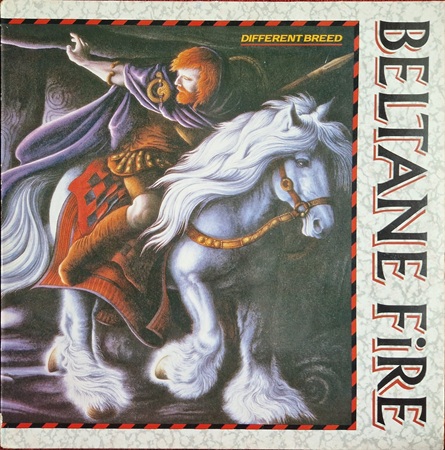
The header image is of the original 1986 vinyl edition, which I own. For decades, this and the tape version were the only formats the album was available in. The band would sometimes lament label CBS‘ unwillingness to release it on CD, which is also why I ended up buying an original copy.
The band’s cries were finally answered in 2016, when Lemon Recordings released an expanded CD edition, featuring also most of the band’s EP’s. That one I don’t own, but it’s also available on streaming platforms, making virtually everything Beltane Fire ever put on tape readily available to modern audiences.
And whilst the album has its flaws and shortcomings, it’s well worth a listen. It defies convention and easy pigeonholing, bravely being the odd one out. At times, it errs because of this, but there are enough moments where Beltane Fire’s brave music takes flight to make it worth your while.
In From The Vaults we take a dive into the record collection at Only Death Is Real HQ and write about about items of iconic stature or personal significance; rarities and oddities from the archives; obscure gems that deserve more attention; classics of yore deserving of a moment in the limelight; and so on.
 Only Death Is Real
One thought on “From the Vaults #17: Different Breed”