

Year: 2024
Publisher: Salakirjat
Available in: Finnish
Esotericism has risen to become a surprisingly hot topic in Finnish literature during the last few years. This year alone, there’s been at least three other books on esoteric topics by non-esoteric publishers (we covered the translation of Damien Echols’ High Magick here).
Joining in on the fun is Rikhard Larvanto, who previously directed a documentary called Huntu detailing the history of esotericism in Finland. In this book, he expands the scope from Finland to Europe in general: the subtitle of the book translates to “The history of European esotericism.”
The book combines photography, travelogue and depictions of various phenomena and people related to European esotericism. For a book of about 200 pages, both the width of the subject matter and the multitude of approaches becomes a bit too much.
Pretty obviously, Varjotaival only scratches the surface of esoteric Europe. Starting out with the Eleusinian Mysteries of ancient Greece and ending in Paris at the fin de siècle, Varjotaival broaches several thousands of years of history – so obviously any in-depth investigation into the complexities of European mystic traditions is out of the question. Larvanto recognizes this, and instead opts for a somewhat more fragmentary approach of lifting individual cults, orders, phenomena and persons to represent points of time in this long, winding and often quite convoluted history.
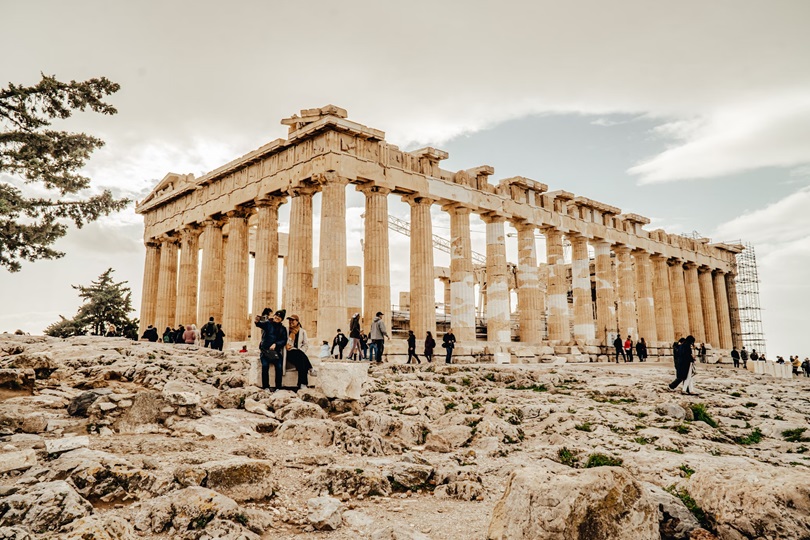
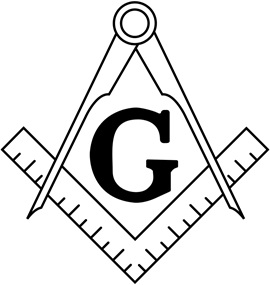
And indeed, a more appropriate subtitle would be Fragments of European esotericism. In roughly chronological order, the book jumps between countries and centuries to present key moments. Wide-ranging topics such as alchemy, witchcraft, the Knight’s Templar, Satan, The Hermetic Order of the Golden Dawn, Freemasonry and Éliphas Lévi are presented in chapters of mostly a few pages. Anyone moderately versed in any of the subjects will most likely know everything Varjotaival tells about them, and then some. But on the other hand, everyone might not be as familiar with every topic discussed in the book.
Varjotaival paints a map of the history of European esotericism only in the broadest of strokes. Huge swathes of occult history are left out, as must needs be in a book of this length. Sometimes the links between different topics may also remain a bit obscure, although some kind of common thread can be discerned. In a few chapters it also feels like focus is lost for a while.
What Varjotaival really is, is a primer into core concepts of European esoteric history. It presents key concepts, persons and organizations, providing a somewhat patchy but illuminating foundation for anyone only starting their exploration of esotericism. Armed with this book, it is a whole lot easier to make heads and tails out of the complex, convoluted and at times even contradictory connections, ties and infuences between the different occult movements throughout European history.
The one thing lacking in Varjotaival is even a brief dip into the symbolism of esotericism. This is hinted at only here and there in the chapters themselves; a brief introduction of some of the most common symbols would be a valuable addition to the in itself very adequate introductory overview the book outlines.
That notwithstanding, as a primer or an introductory class, Varjotaival certainly serves its purpose. Larvanto discusses his topics in a manner easy to understand, often with a helping of dry wit. Especially the many con-men and wind ups included in the history of occult Europe are addressed with a sense of sarcastic humour – but not entirely unsympathetically. Larvanto understands that esotericism is a field bound to attract freaks, weirdos and shysters – and part of the appeal are the elaborate dead ends they’ve created.
The book would have benefited from a bit more proof reading. There are quite a lot of minor grammatical errors littered throughout, and at least one fumble in facts: Friedrich Nietzsche is called a Swiss philosopher. However, these are mere trivialities on the whole.
The book cuts off at the turn of the century, biding farewell with The Hermetic Order of the Golden Dawn and the Theosophical Society. As such, Aleister Crowley is only mentioned in passing. This is a sensible place to wrap things up: Crowley represents a logical point of separation between the history and the present of European or Western esotericism. And Larvanto seems to hint in the epilogue at the possibility of picking up later where Varjotaival now ends its narration.
Varjotaival is not the the be-all, end-all book on European esotericism. It is far too short for that. However, it doesn’t really even try to be that, and it packs a respectable amount of esoteric history within its pages along with some beautiful photographs, which sadly are not entirely done justice by being presented in monochrome on standard book paper.
So, despite having some shortcomings, Varjotaival can be recommended to everyone only starting their own shadow journey into the weird, hidden underbelly of Europe.

Visit Salakirjat’s website to order the book; visit also Rikhard Larvanto’s Instagram page
 Only Death Is Real