

Guénon, René: MODERNIN MAAILMAN KRIISI
Release year: 2024
Publisher: Kiuas Kustannus
Available in: multiple languages
If I were to recommend one book for anyone with an interest in traditionalism, it would surely be French philosopher and metaphysician René Guénon’s (1886-1951) La Crise du Monde Moderne aka The Crisis of the Modern World. In a rather brief exposition of just over a hundred pages, Guénon presents most of the key elements of traditionalist and anti-modernist philosophy in a way that does not become too convoluted. The same cannot be said for some of his other works, which can become very complex.
Originally released in 1927, the book was a resolute denunciation of modernity and the development of the modern world. Although traditionalism as a school of philosophy has by and large passed on to the concealed shadowside of Western culture, Guénon’s work has become a classic – at least for the select few who still look beyond the profanely banal and temporal. This fresh translation speaks of the lasting power of the book: a century after first being published, the ideas presented in it still reverberate.
Some would perhaps say it’s surprising how valid Guénon’s critique of modernism has remained. I suspect Guénon himself would have disagreed: in drawing from eternal concepts, the trajectory he presents was more or less bound to be as predestined.
In a nutshell, The Crisis of the Modern World – I shall use the English name from here on despite discussing the Finnish translation – posits that there is an opposition between the modern world as embodied by the West, and the traditional world embodied by the East. Modernity, instead of being seen as progress and development towards something better, is viewed as a sort of collective fall from grace; a sign and symptom of the Kali Yuga. Guénon posits, that the West and perhaps the world has entered the final Dark Age of the cosmic cycle, wherein traditional order increasingly breaks down.
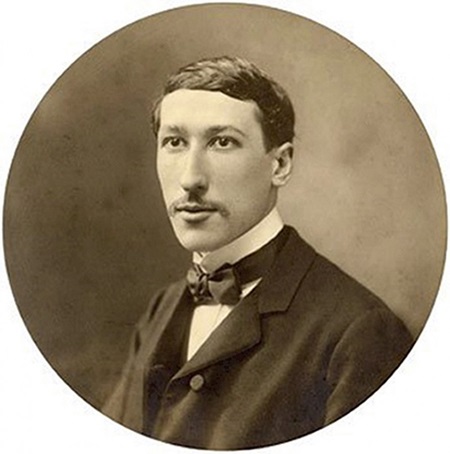
Many secular readers might balk at the emphasis Guénon puts on religion and spirituality, but it is hard to summarily dismiss his denunciation of many of the symptoms of modernity. As he points out, the modernist focus on quantity over quality and breadth over depth leads to an increasing decline not only in what could be called the spiritual quality of the modern world, but also in the life quality of those subjugated to this system. Already one hundred years ago, Guénon pointed out many of the problems involved with rampant materialism.
Personally, the one aspect of this book and Guénon’s thinking overall I have the biggest issue with is his emphasis on christianity. I feel he aptly identifies a spiritual tradition as a core element of Tradition, but errs in believing the catholic church could replace the genuine European, western traditions. I’m more inclined to agree with Julius Evola on this; that christianity is more of an obstacle in a return to genuine Tradition. However, regardless of my disagreement on this admittedly fundamental element in Guénon’s thinking, I find that many of the observations he makes regarding Western spirituality are on point. I merely think he should have gone further.
As must necessarily be in a work as compact as this, there are many things the reader must simply accept. Guénon will briefly present prerequisite ideas without going into too much depth in the present work (he does that elsewhere). The reader must simply accept them as such; not necessarily accept the ideas as true, but accept that the reasoning has been done beforehand, and accept the results as context in order to understand the ideas presented in The Crisis of the Modern World.
This also necessarily means that whilst this brief volume gives a superb overview of the core concepts of Guénon’s and more generically Traditionalism’s critique of the modern world, it also leaves many things very obscure. To truly understand many of the ideas the work presents, the reader must go on to study both Guénon and other Traditionalist philosophers to a much greater extent. This is especially true of Guénon’s aforementioned emphasis on religion – one starts to understand it and his critique of “profane science” much better when one understands the Traditionalist view on the sacral and profane better.
As such, The Crisis of the Modern World should be viewed only as an introduction.
Finnish writer J. J. Suutarinen has done a thorough and pious job with the translation. In preparation for this review, I also read the English translation of Marco Pallis, Arthur Osborne and Richard C. Nicholson (Sophia Perennis, 2004) and compared select sections side-by-side to Suutarinen’s translation. It is consistent with the style of the English translation, retaining the spirit and feel. At times his more direct, less ornamental choice of words is even more potent than in the English translation, conveying better the directness and strength of Guénon’s distaste for modernity.
The Finnish translation also features an afterword by the translator, in which he gives a brief overview of Guénon’s life, work and philosophy. Though it cannot extensively detail all of his concepts and as such fill in the “gaps” mentioned above, it does a good job in providing context and a little bit of added depth. If anyone reads the book and feels a bit confused by what may feel like unjustified conclusions and assumptions in the text proper, it might be worth reading the afterword before proceeding.
All in all, Kiuas’ Finnish edition of The Crisis of the Modern World is a laudable work. Not only is it the first ever Finnish edition of this cornerstone of Traditionalist litterature, it is also the first ever Finnish translation of Guénon overall. It clearly illustrates how relevant Guénon remains even now – but also, lamentably, how much things have progressed in the past 100 years. Can we anymore speak of an opposition of modernist West and traditional East? Or has the modernist infection managed to worm its way to the East as well?
Visit Kiuas Kustannus’ webshop for more info
 Only Death Is Real
One thought on “Of modern crises”