

Nefastos, Johannes: SAATANA – MAAILMAN PELASTAJA
Release year: 2023
Publisher: Aeth Press
Available in: Finnish
I’m guessing that most readers of this site have some kind of perception of or relationship to satanism, but their spectrum is greatly varied. And certainly, there is no shortage of perceptions of what satanism, devil worship and, ultimately, Satan himself (or itself) is. Ranging from one-dimensional comic book satanism to an essentially purely judeo-christian inversion of values, to secular individualism, to convoluted occult ideas, it’s hard to give a be-all-end-all definition of satanism that would cover all bases.
Saatana – Maailman pelastaja eg., Satan – saviour of the world doesn’t strive to unify all possible interpretations of satanism under one umbrella definition, but it does cover a wide range in providing a sort of unified explanation that can at least potentially cover several approaches to satanism. The subtitle “Okkultisen satanismin katekismi” eg., “a catechism of occult satanism” describes well both the emphasis and the approach of the book.

A catechism is, as you may or may not know, a religious text or manual often presented in the form of questions and answers. For a large part of its length, this is exactly what Saatana – Maailman pelastaja is. It lays down the fundaments of “occult satanism” through a series of questions and answers, which explore everything from the ethics of satanism to the nature of Satan and different aspects of practising satanism. Considering the book is only 170 pages long, and about 2/3’s the size of a normal paperback, this means that out of necessity the book merely scratches the surface of things.
That said, Johannes Nefastos – founder of the order of Azazelin Tähti (Azazel’s Star) and probably the most known and merited occult/satanist author in Finland currently – manages to cover an impressive amount of ground in this text. The main Q&A part fleshes out a rudimentary presentation of Nefastos’ perception on satanism, which I’ve heard some people jokingly call “the dark side of theosophy” – and indeed, the book is very explicit about expanding its scope well beyond judeo-christian, abrahamic religions, into the currents of (western) esotericism. Even in this cursory glance, some nods towards theosophy can be discerned.
Proponents of satanism as an inversion of christian beliefs and western ethics (which, obviously, are pretty much a secular development of christianity) may have to do a double take at some of the book’s statements on how so-called occult satanism looks on things such as blood sacrifice and violence, or how evil is not seen as some absolute ideal. However, approaching the concept of satanism from the more metaphysical, occult and larger context the book sketches, this does make sense. Satan is portrayed not so much as a caricature “bad guy” whose sole purpose is to be the antithesis of all things good. His role as Adversary becomes not a destructor, but a challenger and questioner whose ultimate aim is to make one stronger and wiser through tribulations; and whose role as Accuser is to dismantle false moralism and beliefs, and thus make one more honest.
Apart from the Q&A section, which constitutes the main section of the book, Saatana – Maailman pelastaja contains a few essays lifted from Nefastos’ earlier works. These flesh out some of the concepts presented in the Q&A to some extent, providing a bit of insight into the deeper ideology and metaphysics only hinted at in the main section. Still, even with these, the book remains a scratch of the surface that never gets too heavy or complex. Those interested in digging deeper must necessarily read further to get deeper. However, for those interested in a superficial but informed understanding of modern satanism, this book is a concise and rather easily understood package.

Personally, my main objection remains the very character of Satan, and how through this terminology a concrete tie to abrahamic, magian religions exists. Nefastos does argue well for Satan as an archetype expanding above and beyond modern religions and their theologies; as the embodiment of a force of nature or concept far greater than the simplistic and mundane portrayals of the adversaries in modern religion. However, even so, anchoring this archetype to an originally magian conception and name for it strikes a dissonant chord with me.
As such, it should be pretty obvious that I do not label myself a satanist, nor an adherent of the modern, monotheistic and banal religions. And I certainly don’t claim to stand a rung above Nefastos, dismissing his ideas from a superior position. I merely wish to illuminate the point of view from which I approach this book: that of someone with an interest in, and at least some understanding of, esotericism and occultism, but with some philosophical objections to the concept of Satan – perhaps moreso than the concept of satanism, and certainly more than the values of occult satanism as explained by Nefastos.
From that viewpoint, Saatana – Maailman pelastaja is not the book to make me “see the light”. It is, however, a book that achieves what it sets out to do, and offers a nuanced and yet coherent take on satanism. Its presentation bears no whiff of sensationalism or provocation, but neither does it shy away from being provocative when it is justified. Certainly, people who categorically dismiss all forms of satanism through their prejudices would do well to read through this book. It doesn’t take too long, and might expand one’s understanding of things a bit.
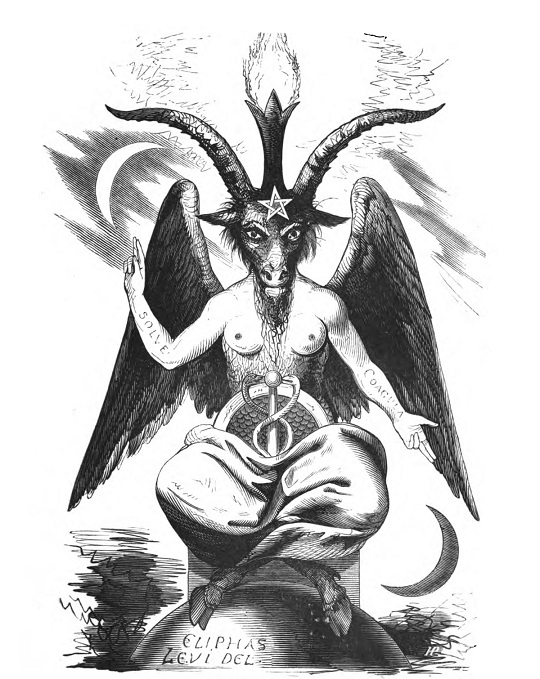
Visit Azazelin Tähti’s website for more information
 Only Death Is Real